


Some summer days when I was little, my parents took me to PortAventura, a theme park about an hour from Barcelona. I loved going, but the journey always felt endlessly long. I remember waking up early, getting into the car, and closing my eyes, hoping I’d fall asleep and magically wake up at the park. Sadly, I had trouble falling asleep in general, and it only got worse in the car. That insomnia, mixed with the excitement, made it almost impossible to drift off on the way there. (The way back was another story, I usually fell asleep the moment we hit the road.)
That’s why I have such clear memories of my mother announcing, “The Devil’s Bridge!” once we were near Tarragona, as a sign that we were super close to the park, and I could already start gazing through the window in search of the outline of the attractions.
The concept of the Devil’s Bridge has been so deeply ingrained in my mind that I never thought of it as a “haunted place” until I passed through it the other day. This time, instead of looking out the window for roller coasters, I looked up the legends.
What is a Devil’s Bridge?
The concept of the Devil’s Bridge is fairly widespread across Europe. It usually refers to arched bridges that, at the time of their construction, represented a major architectural or technological achievement.
Although each bridge has its own myth, most share a common theme: the structure is either built by the devil himself or the result of a pact with him; an attempt to explain what once seemed like an impossible feat.
Given the number of strange and impressive bridge designs across Europe, it’s fair to say the continent is dotted with Devil’s Bridges.
Famous Devil’s Bridges
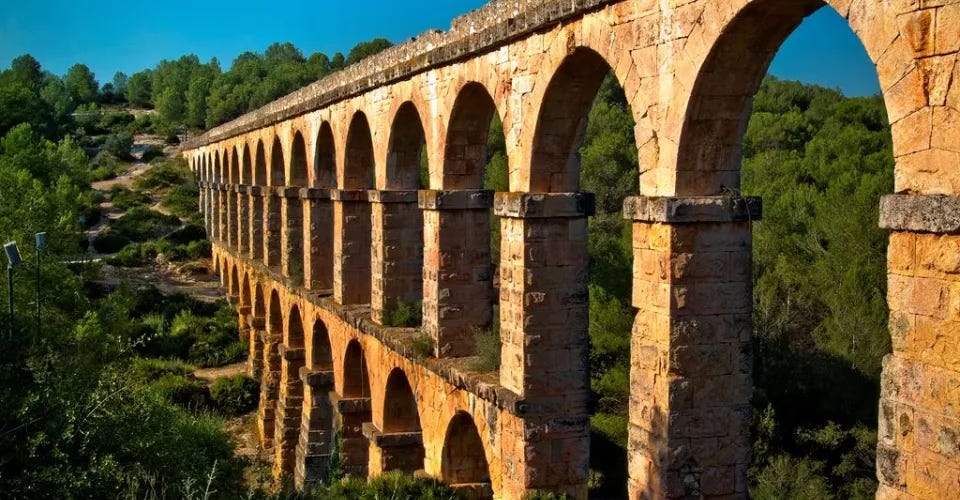
Aqueduct of Ferreres:
This is a different kind of Devil’s Bridge — in reality, it’s an aqueduct built by the Romans between 27 BC and 14 AD. Various legends surround its supposed construction by the devil.
The most common version tells that the village of Tarraco (now Tarragona) was struggling to access water. The townspeople set out to build an aqueduct to bring it in from the hills. Faced with the difficulty of the task, the main builder asked the devil for help. As usual, the devil agreed he would take the soul of the first living creature to drink from the aqueduct. As in many of these legends, it was an animal who ended up paying the price.
Another version involves a young woman who, tired of walking to the hills to fetch water, asked the devil to build the aqueduct. He agreed, in return for her soul. But the girl added a condition: the aqueduct had to be finished before sunrise. Just as the devil was about to complete it, God made the sun rise an hour early, saving her soul.
A third legend also involves divine intervention. In this one, a man gambles away his soul in a game. When God hears of it, he punishes the devil for meddling in “his domain” by forcing him to build the aqueduct as penance.
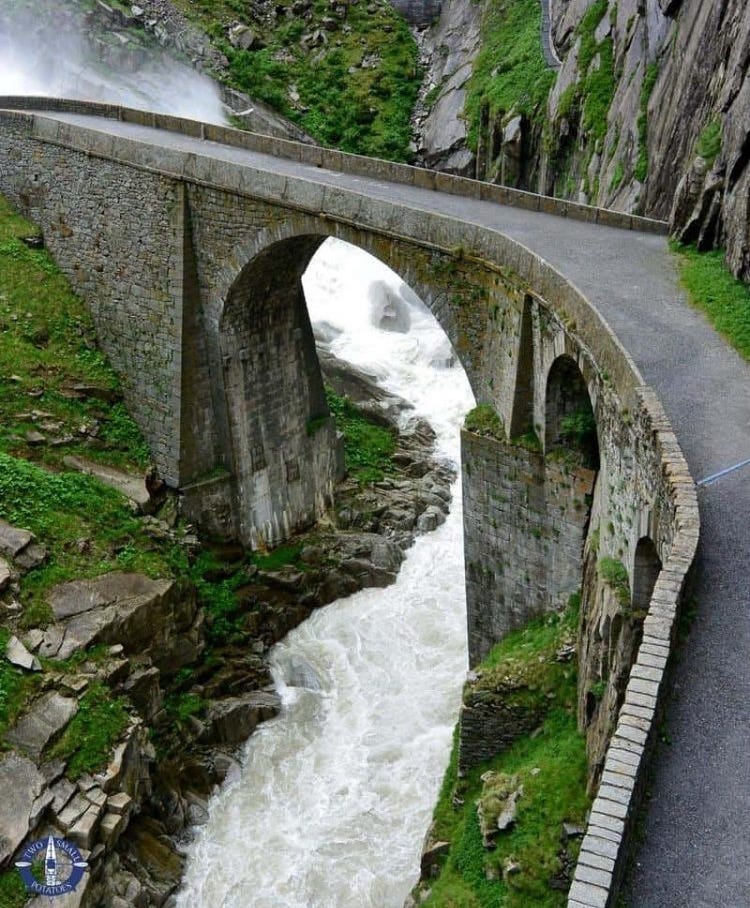
Teufelsbrücke, Switzerland:
According to legend, the villagers once recruited the devil to construct a bridge across the gorge (a narrow valley). The devil agreed, on the condition of receiving the first soul. When the villagers sent a dog across instead, the devil was enraged. As revenge, he picked up a massive stone, intending to destroy the bridge. However, a holy man intervened, placing a cross on the stone that forced the devil to drop it. For centuries, this enormous rock remained visible at the end of the valley.
The rock still exists, it’s a block of granite weighing 2,200 tons. At the end of the 19th century, it was sold to a master chocolatier who used it as an advertisement. In the 20th century, the rock was nearly destroyed when its location interfered with motorway construction. However, after public opposition, it was relocated and now stands as a landmark along the highway.
Throughout history, the bridge has been the site of strange events. On St. Patrick’s Day in 1608, a party of Gaels was crossing the bridge with a fortune when one of the horses fell, sending the treasure plunging into the torrent below. Centuries later, the area became a dramatic battlefront during both the French Revolutionary and Napoleonic Wars.
Pontarfynach, Wales:
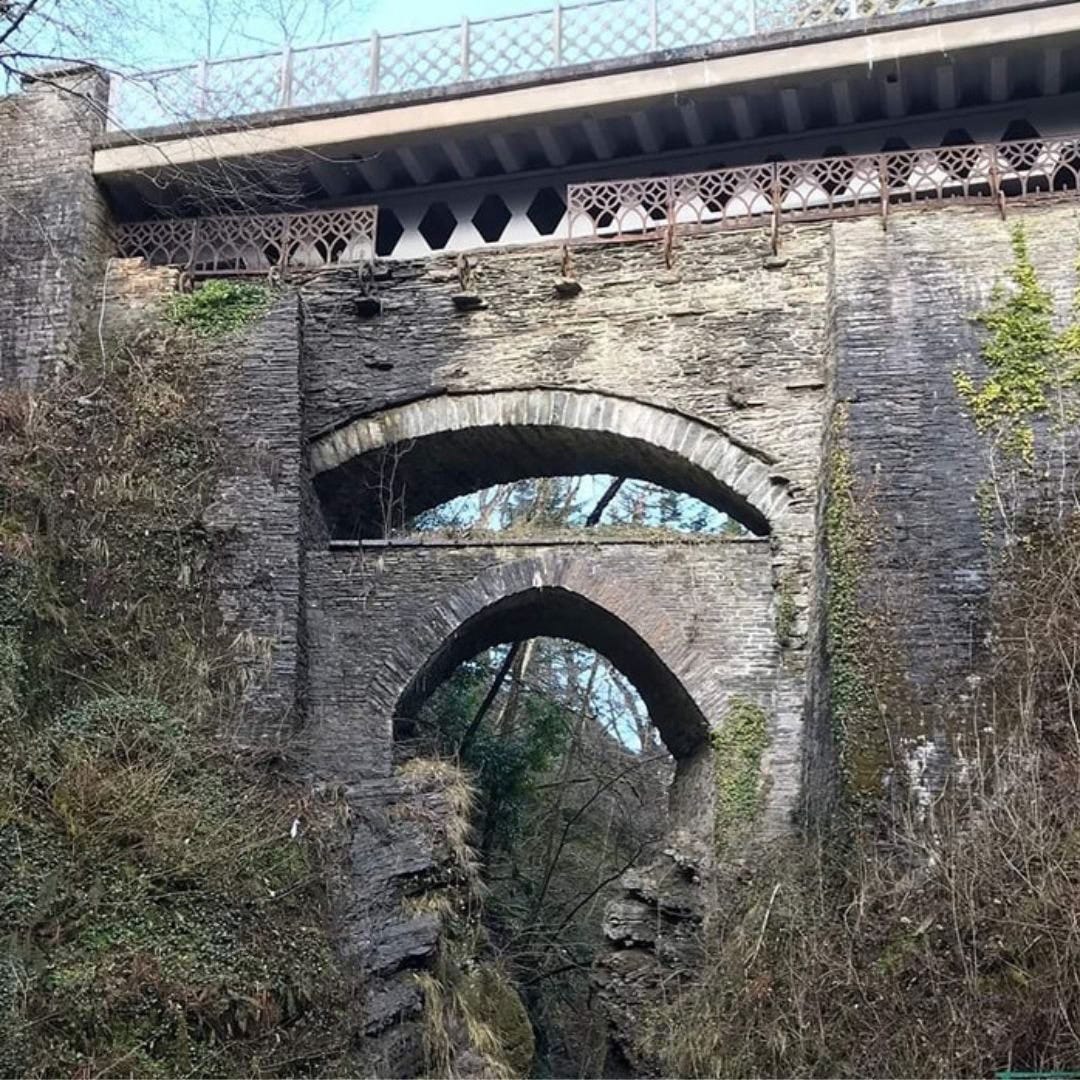
This village in Wales is famous not only for literally being named “Devil’s Bridge,” but also because the bridge in question consists of three stacked bridges above the River Mynach.
The main legend tells of an old woman who, having lost her cow on the other side of the river, asks the devil for a bridge. The devil (who by this point seems to have developed a standard contract for bridge construction) agrees, asking for the first soul to cross it. The old woman ends up tricking her dog into crossing first.
The three stacked bridges are a very curious construction. They coexist, oone built on top of the previous, as none were demolished. The lowest arch is the oldest, dating from the medieval period and made of stone. In 1753, a second stone arch was built, while the older one was repaired and repurposed to support the new structure. Finally, in 1901, an iron bridge was constructed above the others to correct the slope of the road.
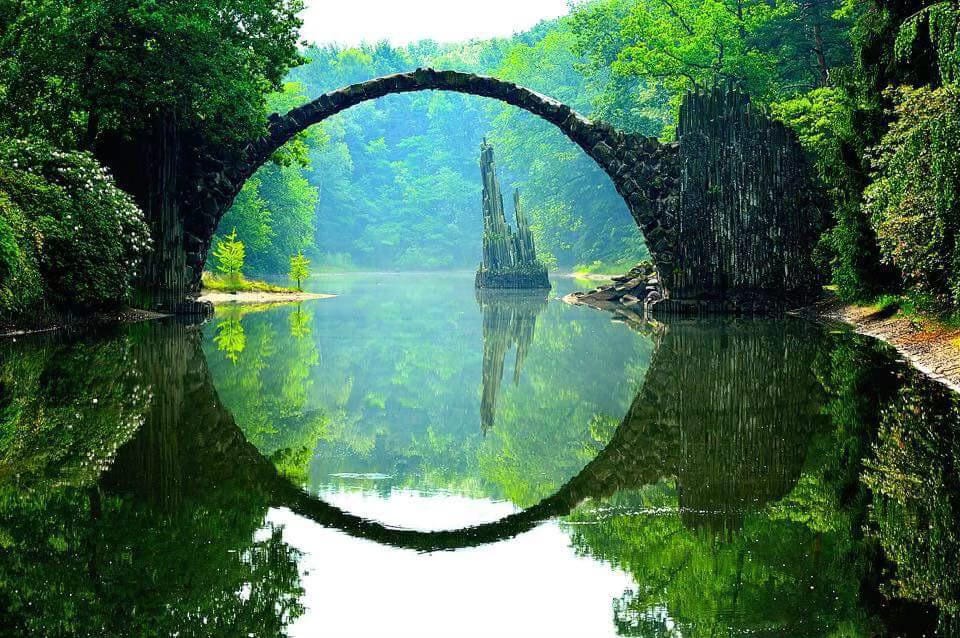
Other famous bridges that caught my attention: Lezzeno Bridge in Lake Como (I want to make a post about the mysteries of Lake Como), Pont Valentré in France, and Rakotz Bridge (which is stunning, though sadly cannot be crossed).
On Bridges
I think bridges are beautiful. They can become iconic landmarks of a city (see the Golden Gate Bridge in San Francisco or the Brooklyn Bridge in New York), while also helping to connect it all.
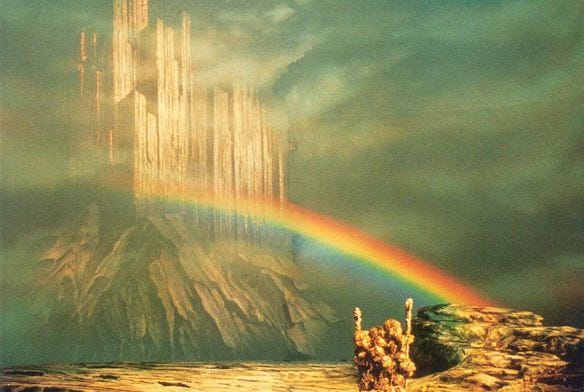
Beyond that, from a more mythological point of view, a bridge symbolizes a kind of union: it links two lands, signifying transit. If we extrapolate this to a more mystical realm, these points of connection can also extend to the divine. Think of the Bifröst, which connected Midgard (Earth) with the land of the Norse gods. A bridge can also symbolize the passage between life and death, which is why so many traditions say the first person to cross must “pay the price,” often by dying young.
Despite the fact that many bridges remain in pristine condition despite time and rough moments, they carry more than just a celestial meaning. For centuries, crossing a body of water was considered perilous, prompting travelers to mark safe crossing spots and invoke divine protection.
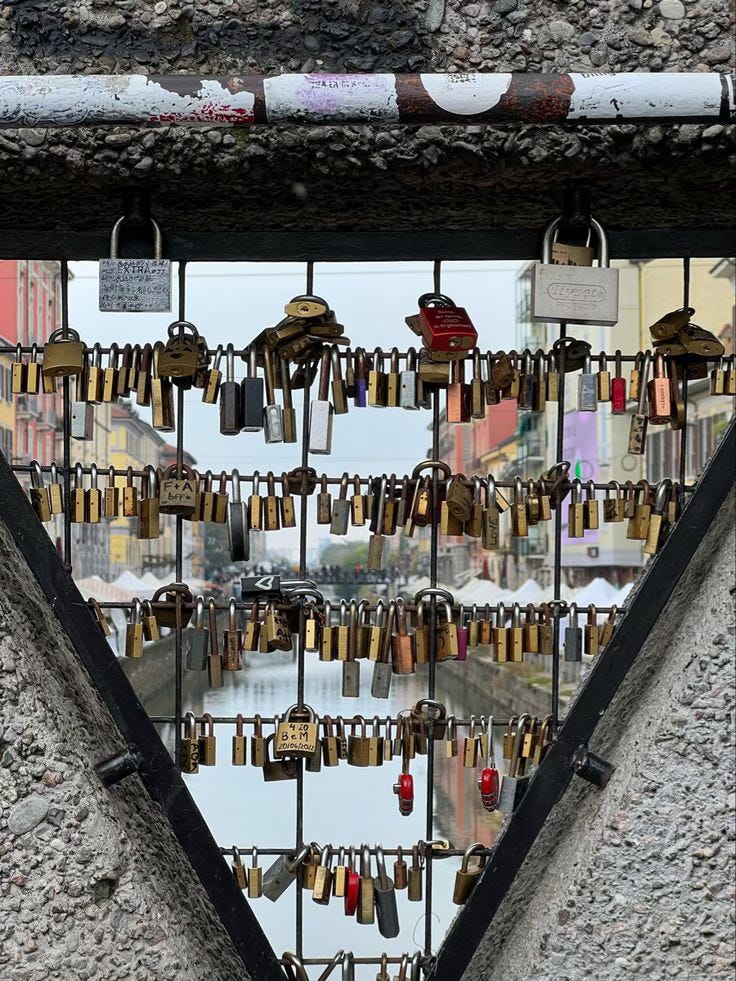
Even today, there’s often an uneasy feeling around bridges (and I’m not just saying this because of my vertigo). There are also lingering superstitions: many drivers believe you have to lift your feet when crossing a bridge or railroad track. If you don’t, you’ll never meet your true love—or worse, you’ll die young. In other cases, the superstitions are more romantic: leaving wishing locks as a symbol of unity (after all, the bridge doesn’t break), or kissing the person you cross with.
Despite my fears, I also see bridges as remnants of the past and present; structures that connect and give you a new perspective on the river below. Some are breathtaking works of art; others might be downright ugly. But all of them are threaded with stories: a chain tied to the railing, something you once accidentally dropped, the same bridge your parents crossed when they were young. They are enduring structures of connection.
I hope you enjoyed it,
Meri 🐦⬛
Molt interesant 😈